

Why Dark Traffic in Marketing Is the Most Underrated Analytics Problem
Digital Marketing Blog for SEO, Content & Growth Insights
Digital marketing continues to evolve as search engines, social platforms, and consumer behavior change over time. Through this Digital Marketing Blog, I share practical insights, proven strategies, and industry observations to help businesses make informed marketing decisions. Whether you’re looking to improve SEO performance, create better content, strengthen your online presence, or understand the latest digital trends, these articles are designed to provide valuable guidance that supports long-term business growth.
In a world where marketing channels are becoming increasingly fragmented, understanding how users discover, engage with, and share content has never been more important. While most businesses focus on measurable sources such as organic search, paid advertising, and social media, a significant portion of valuable customer interactions often happens outside traditional tracking systems. Exploring topics like dark traffic, attribution challenges, user behavior, and evolving digital trends can help marketers make smarter decisions and uncover growth opportunities that standard analytics reports may overlook. Digital Marketing Blog for SEO, Content & Growth Insights
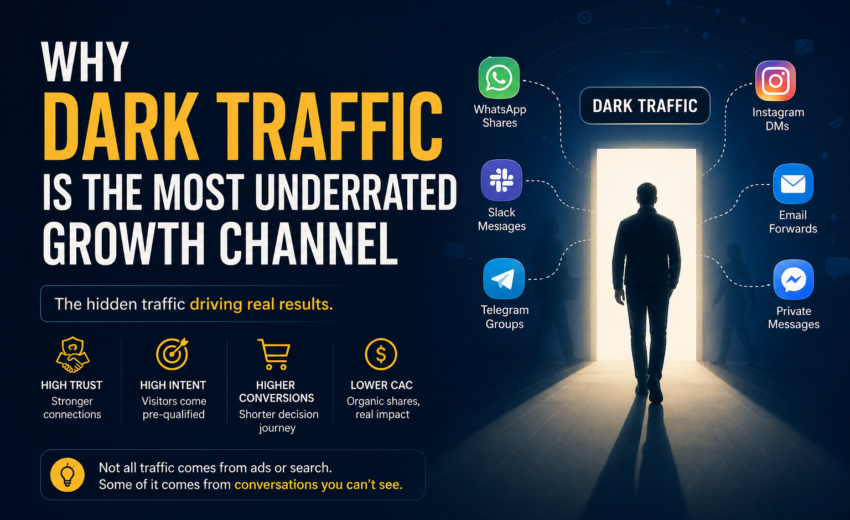
Dark traffic refers to visits that appear as Direct Traffic in analytics platforms, even though users did not type the URL manually. In many cases, these visits originate from private sharing channels such as WhatsApp, Telegram, Slack, email forwards, and direct messages.
From a digital marketing perspective, understanding dark traffic in marketing is essential because it often represents high-intent users, trusted recommendations, and conversions that traditional attribution models fail to capture.
What Is Dark Traffic in Marketing?
Dark traffic is website traffic generated through private digital spaces where referral data is not passed properly to analytics tools.
Common sources include:
- WhatsApp shares
- Telegram groups
- Slack conversations
- Instagram direct messages
- Messenger links
- Email forwards
- Copy-pasted URLs from chats
Because tracking parameters are often missing, these visits are categorized as Direct Traffic, creating a misleading picture of performance.Tools such as Google Analytics help marketers identify traffic patterns, user behavior, and potential attribution gaps.
Why It Matters for Businesses
Many brands underestimate how customers actually discover products online.
Not every purchase starts with a Google search or paid advertisement. In many cases, users purchase because:
- A friend recommended a product privately
- A colleague shared a useful tool
- A community group suggested a service
- Someone forwarded a limited-time offer
These referrals happen in private environments where trust is already established, making them highly valuable.
Why Dark Traffic Converts Better
From a conversion standpoint, dark traffic in marketing often performs better than cold acquisition channels.
1. Built-In Trust — Users arrive through personal recommendations rather than advertisements.
2. Higher Purchase Intent — Visitors already have context before clicking.
3. Shorter Decision Journey — Less convincing is needed compared to first-time ad traffic.
4. Lower Customer Acquisition Cost — Organic sharing can generate conversions without additional media spend.
Why Most Brands Miss This Opportunity
A common mistake in digital marketing is over-prioritizing only measurable channels. Since paid ads and SEO provide clear dashboards, businesses naturally invest more into what they can easily track. However, not every impactful channel is fully visible inside analytics tools.
This creates underinvestment in shareable content, referral experiences, and community-driven growth.
How I Would Approach Dark Traffic in Marketing Strategically
If I were managing growth for a brand, I would focus on the following:
- Optimize for Shareability — Create guides, templates, checklists, and limited offers people naturally send to others
- Improve Attribution — Use tagged share links and campaign parameters wherever possible
- Analyze Direct Traffic Behavior — Look for sudden spikes, high mobile conversions, and unexpected landing page traffic
- Build Referral-Friendly Funnels — Encourage users to share offers, tools, or resources privately
Why This Topic Matters in 2026 and Beyond
As privacy grows and public social feeds become more crowded, more user behavior is shifting into private communities and messaging apps. Brands that understand dark traffic in marketing early will have a strong competitive advantage.
Final Thoughts
Dark traffic may not be the easiest channel to measure, but it is one of the most powerful. If you’re looking to improve attribution, SEO performance, and overall digital growth, feel free to get in touch to discuss your marketing goals.
April 30, 2026
A WordPress Commenter April 30, 2026
Hi, this is a comment.
To get started with moderating, editing, and deleting comments, please visit the Comments screen in the dashboard.
Commenter avatars come from Gravatar.